Dev Update: Metrics Data Export, Android Support
This month, we’re teasing Metrics Export, an upcoming premium feature for studios who’d like to integrate their UGC metrics, and more!
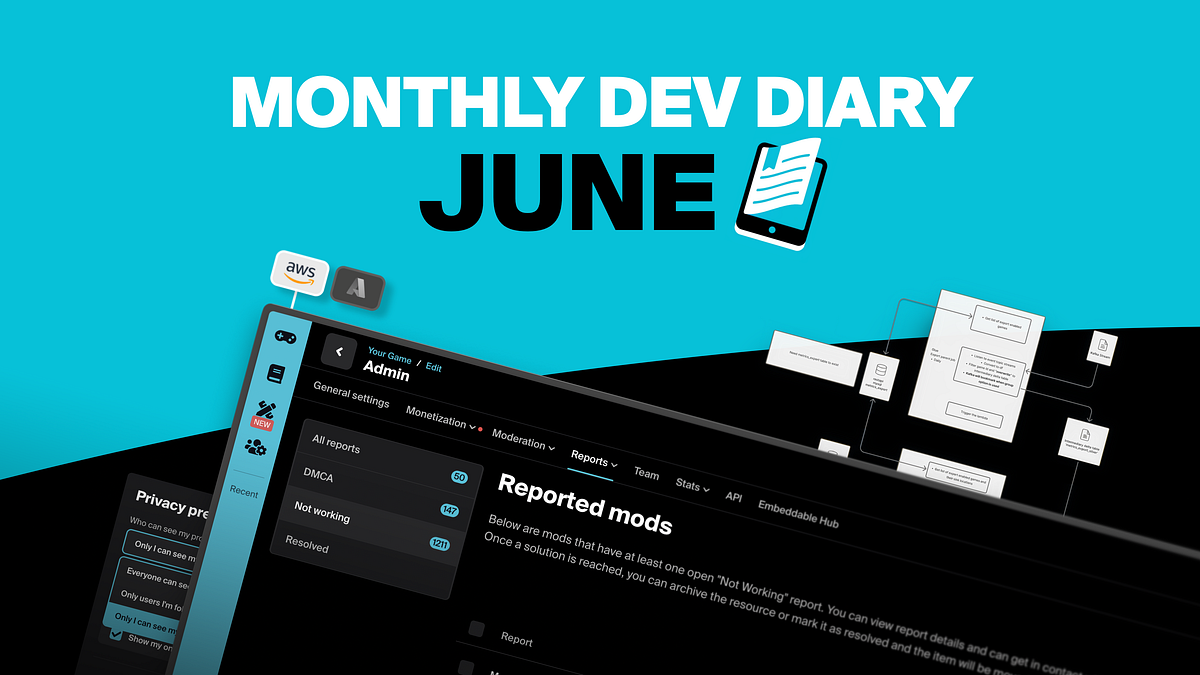
In this month’s Dev Diary, we’re teasing Metrics Export, an upcoming premium feature for studios who’d like to integrate their UGC metrics into their systems and reporting.
Also putting some light on some experience improvements, especially aimed at making mod creators’ lives easier with improved privacy options to define who can interact with you on mod.io, and better filtering of anonymous reports. We’re also keeping up with the latest for Unreal Engine Android support.
As always, you can find the latest in our changelog on Discord, or by keeping up with our GitHub repositories and documentation.
Metrics Data Export
Quoc Tran, Metrics Engineer
Metrics Export is a new feature designed to empower game studios by giving them direct access to their UGC data stored in our data lake. Now, as well as being able to access insights and data surfaced by our in-platform dashboards, studios can export raw metrics data and use it in any tool or system they choose via AWS or Azure, such as BI dashboards, in-house analytics platforms, or custom reporting pipelines.
This will be a premium feature for studios that want to leverage their data for deeper insights and custom analytics. The backend work for the Metrics Export feature is complete, and it has been handed over to our frontend team for implementation.
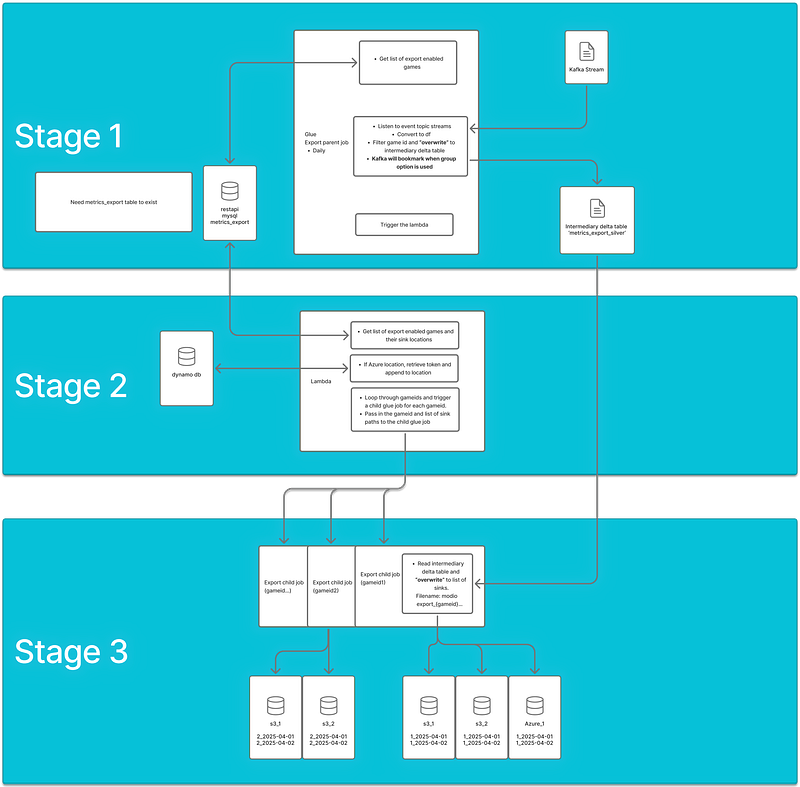
The current implementation is a daily export (yesterday’s, midnight UTC) of data in structured formats via our platform. We currently support exporting data in Parquet format to AWS S3 and Azure Blob Storage.
In the future, we plan to implement a pay-for-historical data model, allowing studios to access and export data from any point in time.
When additional advanced playtime metrics are integrated, they will be included in the export feature as well, providing even more value and encouraging more studios to adopt and integrate these capabilities into their workflows.
Anonymous Report Filtering
Jayden, Backend Engineer
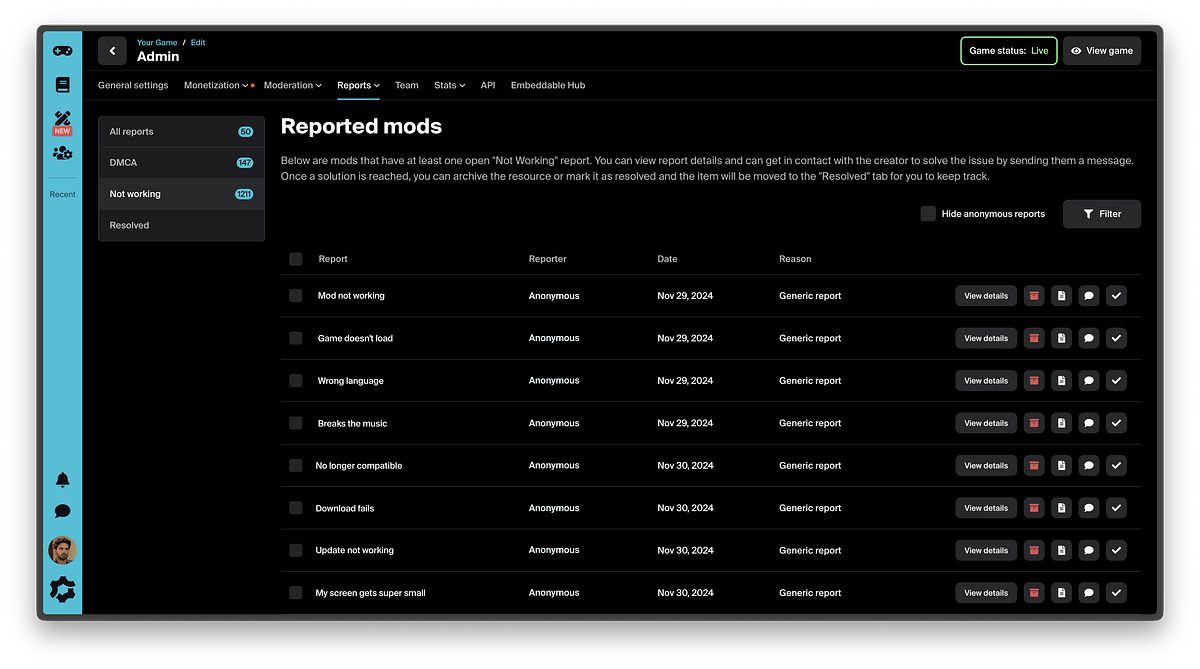
We’ve recently introduced the capability in our API to filter out reports made by anonymous (logged-out) users. This extends across the site, from our mod, game, and site report views, which each present a different hierarchy or aggregation of reports.
This answers the feedback from partners that filtering through the noise of reports made against mods can be difficult, and that logged-out users can often submit low-quality reports (as a heuristic), resulting in more significant issues being hidden amongst the noise. This change will allow mod, game, and site admins to have greater filtering capabilities and controls for how they manage and prioritise issues flagged by their communities.
This filter significantly reduces the number of reports to address when prioritising the logged-in community.
Now that the capability is available within the API, the next step will be to surface it on the frontend, in the form of a toggle that can be enabled or disabled to get this feature into the hands of our customers, both studios & our amazing community of mod creators:
SDK and Unreal Android Platform Support!
Ash, C++ Engineer
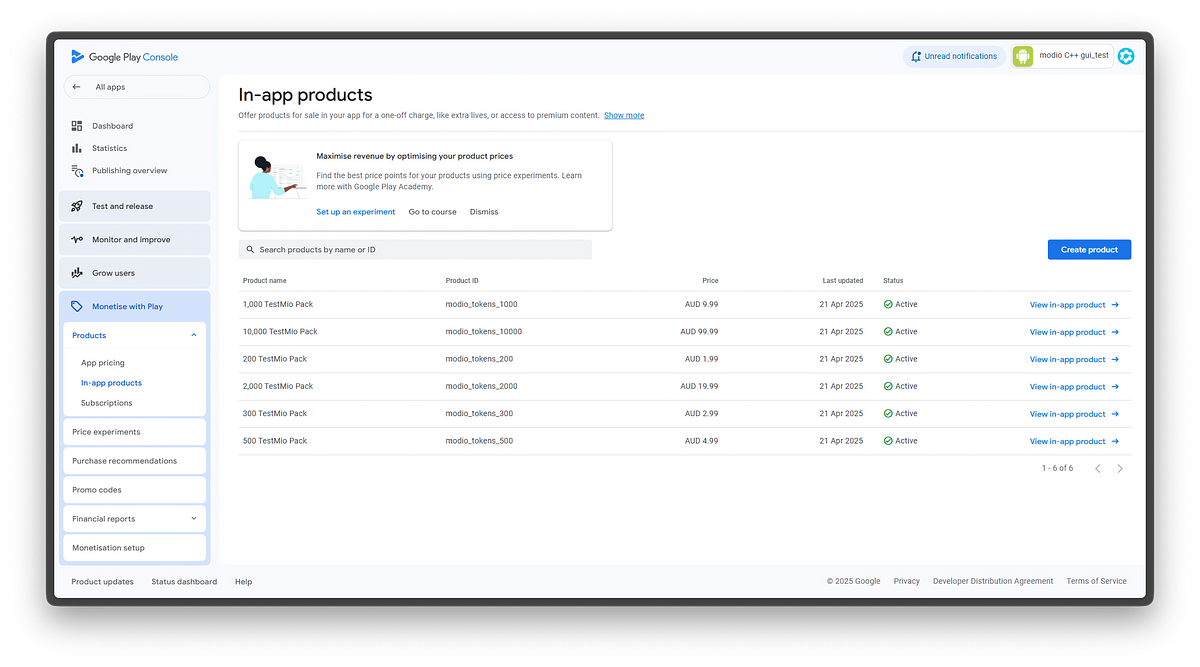
Android support is levelling up for Unreal Engine and SDK! We’re currently finishing up entitlements work on Android to enable monetization support, as well as adding external storage support for Android Devices.
This work required configuration in Google Cloud Console and Google Play Console, as purchasing (including test purchases) can only be done through a signed build downloaded through the Google Play Store. Our test app, GUI Test, also needed to be expanded, as by necessity, the mobile version of the application needs to be a vastly cut-down version of the desktop one.
While working on Android Entitlements, we hit a blocker where the GUI Test was using a deprecated version of the Google Play Games SDK, blocking builds from being uploaded to Google Play. This required migrating the GUI Test to the latest version and updating our documentation!
External storage on Android provides a shared, user-accessible space for apps to store large, non-sensitive data while ensuring files persist through app updates. Since Android 10, storage restrictions limit access to external storage beyond their own designated folder, making data management more secure but restricting flexibility for developers needing broader file access. We’ve updated our SDK to support external storage with a flag that can be set by the developer when initialising the Modio SDK.
New Privacy Options
Callum, Frontend Engineer
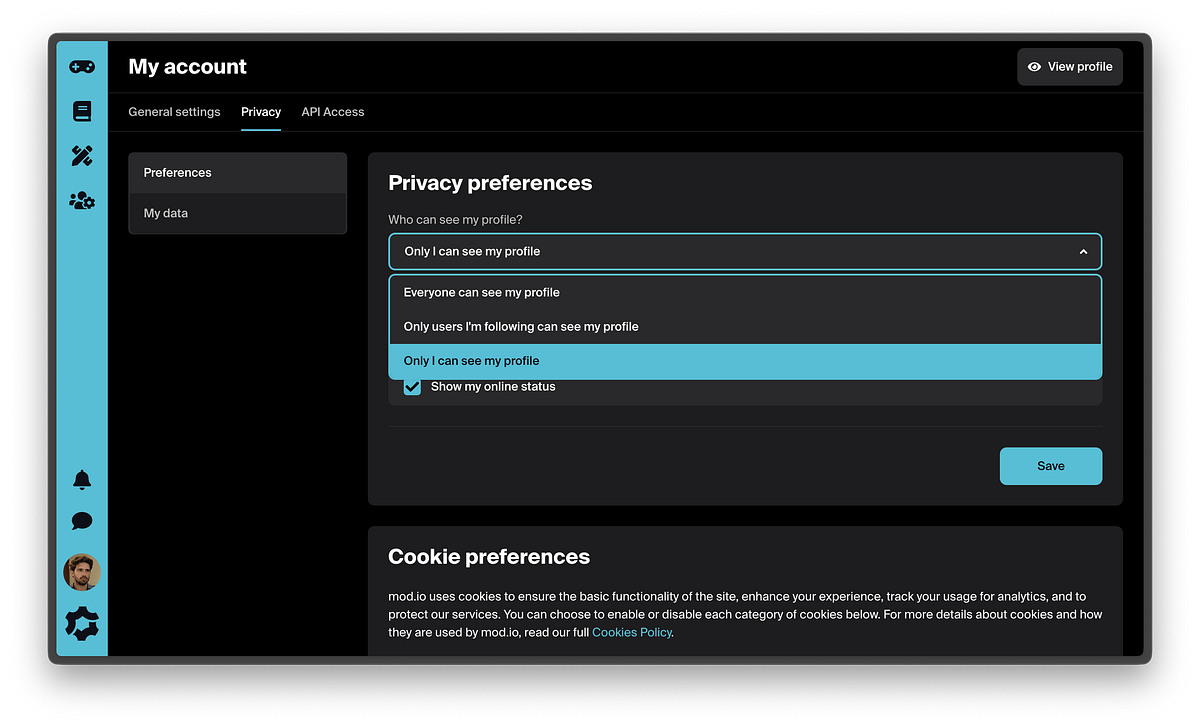
This month, our web services team delivered some improved privacy options for all mod.io users. This had been a long-standing request from some mod creators who wanted better control over how their community could interact with them.
Now, via the account Privacy page, users are able to control who can message them and view their profile. A user’s profile can be open to anyone, only to the users that the user is following, or hidden from everyone.
The same rules apply to messages, with the addition of an option allowing verified users to message each user. Verified users are those who have a valid email linked to their account. Members of a public game can bypass these rules so that they are still able to moderate problematic users.