2025 - Year in Review
We started 2025 with a mission to make creators our focus, they underpin the success of every game on mod.io, and drive the creativity which makes UGC such a growth factor. And while we kicked off 2026 with the knowledge there is always more to do, we’re pleased to have hit new highs in this area and many others last year.
Our year in numbers
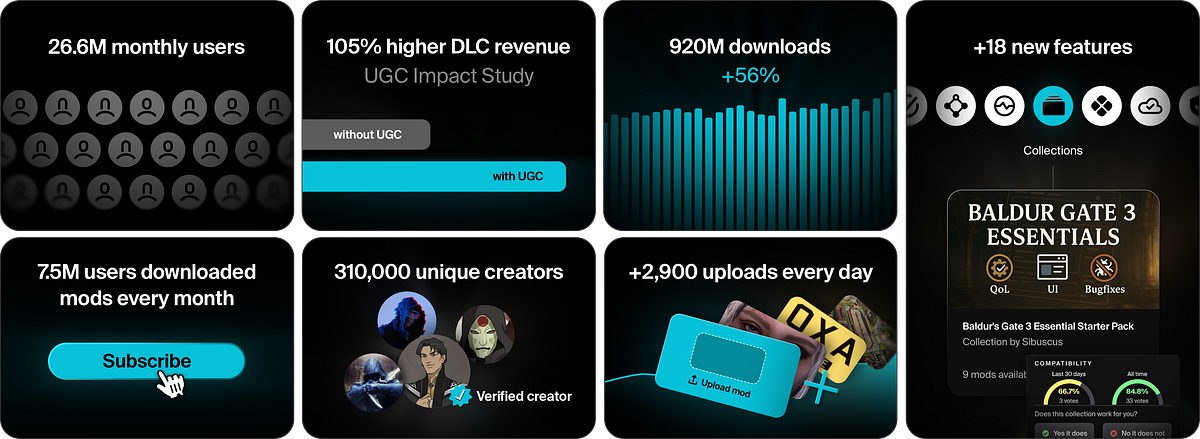
All of the key metrics we benchmark ourselves on saw major growth. We smashed last year’s average of 14.4M monthly users, reaching 26.6M users on average. We also introduced a new metric to measure attach rates, and found 30% of users (7.9M) add or update at least one mod in their collection each month. Over 2,900 mods were shared each day by more than 300k unique creators, and we got damn close to 1B mod downloads in 12 months, which is particularly notable as it took us 6 years to celebrate the first billion mid-last year.
You can continue to track our metrics via our live status page.
Cross-platform modding trajectory
In pursuit of our long-term ambition to establish the standards for multi-platform mod support, 68% of all games that brought mods to console, mobile, VR and streaming platforms, picked mod.io as the solution of choice. More than 1 game a week went live with mod.io, 26 more games than 2024, with key moments including being the first approved UGC middleware solution for Switch 2 support, successfully working with first parties to define the path forward for advanced mods, and supporting IAP monetization for all major platforms, which was an incredible feat.
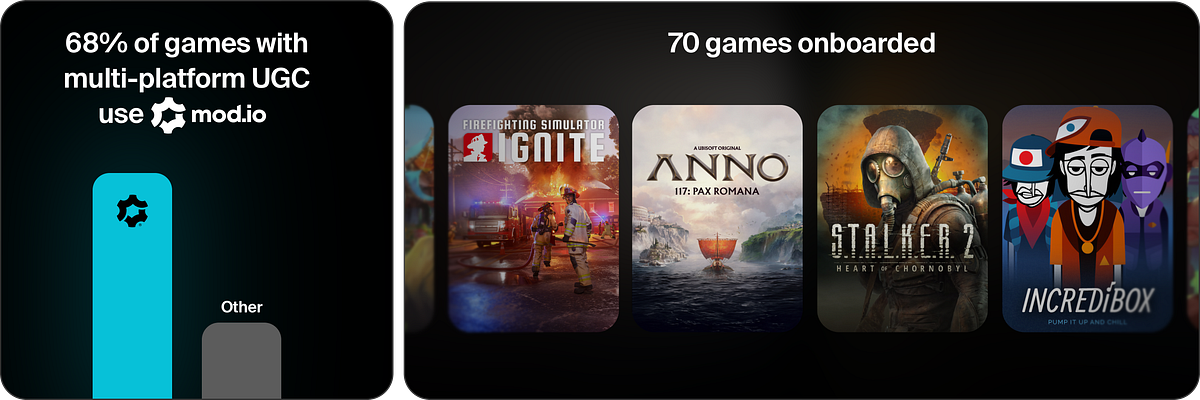
It’s the hidden complexity which mod.io helps studios navigate and solve, packaged up as turnkey solutions for Unreal, Unity and Custom Engine games, which makes us the standout solution when studios do deep dives and technical evaluations. We’re continuing to gain market share as a result, up 4% compared last year for multi-platform game launches. As new frontiers like mobile, live-service, Free-to-Play, and new regions like APAC start to shift their gaze towards UGC, to open revenue streams and address escalating user acquisition costs, we’re extremely well positioned to be the market maker.
Launches & pipeline
In 2025 we announced we’re working with CDPR to bring cross-platform mod support to The Witcher 3: Wild Hunt, to launch in 2026. The creation tools and in-game user experience CDPR has crafted are phenomenal as you’d expect, and we can’t wait for it to go live.


We also announced the success we’ve had with Ubisoft for Anno 1800 will be continuing in Anno 117: Pax Romana, which is extremely validating as we love nothing more than seeing partners renew their trust in mod.io after a successful first experience. S.T.A.L.K.E.R. 2: Heart of Chornobyl launched earlier in the year, and will expand mod support to PlayStation 5 following their recent launch on Sony’s console. Other unique partnerships included:
- Working with NVIDIA G-Assist, to launch a portal hosting plug-ins built by the community which connect through to their AI Assistant to help tune, control, and optimize your system.
- Incredibox, a much loved beatboxing music game which self-onboarded, built a phenomenal example of how mods on iOS and Android can work. With 2.7M downloads in the first 3 months community adoption is extremely positive, and a perfect game for us to break new ground on mobile.
- Our launch slate for 2026 is very strong; inbound has steadily grown, and the ambition of studios pursuing UGC has ramped up in parallel. A big driver of this has been studios planning UGC strategy much earlier in their development cycle. We love being the post-release anniversary gift to players, but it’s exciting to be working with a number of not yet announced games for day one support.
- All releases considered, we’re projecting to be above 50M MAU towards the end of 2026, which would be a phenomenal outcome.
Industry analysis
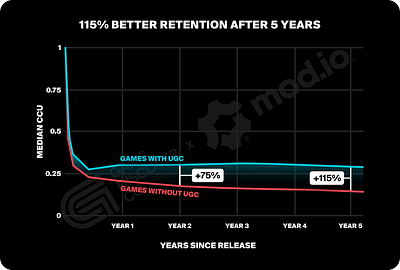
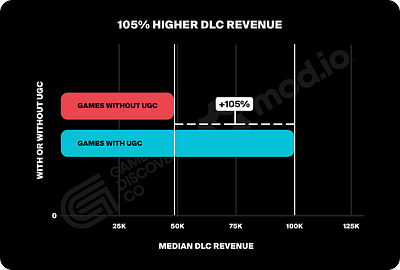
We collaborated once again with GameDiscoverCo, to refresh the numbers we presented last year on the impact UGC can have on games. For consistency we kept our focus on 5 years of historical data from the largest games on Steam ($1m+ in month one revenue), comparing the cohort with mod support (20%) vs. those without. What changed was we included all games which have an official UGC solution (Steam Workshop, mod.io, CurseForge, or proprietary solutions), and expanded our findings to incorporate console data for the first time. All of the fundamental metrics strengthened the case for UGC, with mod supporting games showing:
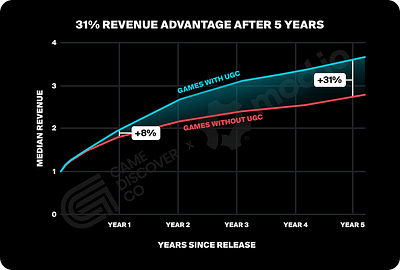
- 31% greater revenue
- 115% greater player retention
- 105% uplift in DLC revenue
- 16% ~ 24% greater year 1 revenue on consoles (Xbox and PlayStation), significantly ahead of the 8% PC games gain at the same timeframe. We attribute this differential to UGC being such a unique and coveted feature for players on these platforms, with less than 2% of games supporting UGC, compared to 20% on PC.
Other research we love to see is BCG talking about the next era of growth in-games, which includes 40% of players engaging more with UGC in 2025 than 2024, and parents reporting two of the three most popular first games that their children play include a significant amount of UGC: Minecraft and Roblox. Based on a material uptick in conversations from studios outside of the PC modding & UGC stronghold, it’s very clearly influencing studios direction.
Product roadmap
In 2025 we shipped 18 major features, alongside our main focal points on creators, we started exploring how we can add value earlier in the journey for studios, to ultimately grow long-term UGC adoption. Highlights of new features we rolled out for partners using mod.io in 2025 included:
- Creator Dashboards & Verified Creator Program. While there are many forces which motivate creators, the number one reason once they’ve got mods live, is the rush of seeing your creation be played, enjoyed and inspiring others. We have many projects in the works to help establish a positive feedback loop which fuels further creation, but the first stop was putting all of the key data at a creators’ fingertips. Next stop is a notification system which will push key updates to creators to keep them informed, and a centralized dashboard which aggregates all activity across all mods in one location. Alongside this, we also invited a small cohort of respected creators from the community into a verified creator program, whom we can talk candidly about upcoming features. Already it’s yielded fantastic feedback, and helped a number of studios who want to validate their plans by talking to experienced creators, so we will look to expand it in 2026 as our focus on creators continues.
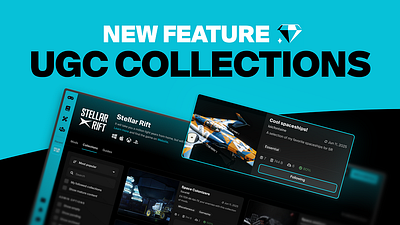
- Collections. Mod creation and consumption has changed materially in the last decade, as total conversions made way for specalized mods, which introduce new maps, gameplay systems, visual, audio and QoL enhancements. A byproduct of this shift, was to allow players to combine multiple mods into the ultimate play experience. The purpose of collections is to allow these playlists to be shared with friends, or by influencers to all of their followers, which massively grows the reach and accessibility of mods.
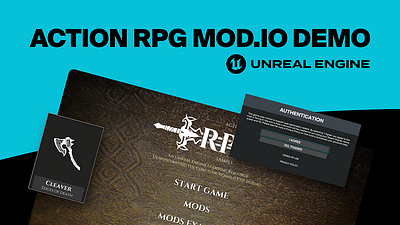
- ModioUGC Framework and Action RPG Demo for Unreal. In the last few years we’ve consistently broken ground for supporting mods on new platforms. The methods commonly adopted by studios and players haven’t kept up, often resulting in a blocker to adoption, rework, and complex integrations. While we have always focused on the distribution layer of UGC, we felt there is a major gap in the market to establish best practices and standards for loading mods, starting with Unreal Engine. ModioUGC is an open source opinionated framework which marked our first step in this direction, and has already been referenced by multiple AAA partners, including Epic who recognize the need for a modernized approach for studios to reference. Given the early success, we intend to continue investing in similar frameworks and examples for Unity, with the expectation this will significantly broaden the addressable market for UGC, and raise tides for all participants, particularly studios taking their first step in this direction.
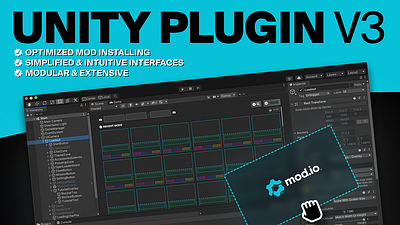
- Unity v3 Plugin. Rearchitected from the ground up, it is a highly performant and modular system, from component UI to extensible interfaces, giving us a future proofed solution, without limiting the freedom studios have to implement mods in the manner which best suits their game. After a few years where Unreal and Custom Engine games dominated major integrations, we’ve had a surge in Unity interest, driven in part by the ease at which these games are going through the implementation process on our v3 tech.
- USD Marketplace. We expect the largest UGC economies to use virtual currency as it offers the greatest flexibility and upside, as evidenced by Roblox, Fortnite and other industry leaders. While virtual currency is the default monetization solution we offer, USD marketplace support was introduced as an alternative for studios who want the ability to sell UGC directly, similarly to what is seen with Microsoft Flight Simulator and Minecraft. Monetization is complex, and we believe that providing our partners with the ability to deploy the model they believe will get the best reception, and integrate the smoother in their existing ecosystem is key to success.
Other features shipped include automated modfile schema validation, dedicated servers framework, exportable metrics, creator reports, bulk admin actions, cloud cooking, new documentation (praised by studios), Switch 2 and Meta Quest 3 support, alongside Android and iOS monetization and plenty more.
Looking ahead
There is a lot we’re excited about when reflecting on 2025. Outside of the activity occurring on mod.io, it was extremely pleasing to see games like Battlefield 6, Genshin Impact and Grand Theft Auto V make big moves to formalize their UGC strategy. Major players, with a lot of untapped potential with UGC, who are aiming for impact on their core game experience, rather than going after metaverse ambitions like Roblox and Fortnite have done since 2021. We expect them to set case studies and best practices that will be relatable and applicable for a large number of games.
As opportunities rise, so do challenges, and the rapidly evolving regulatory landscape demands smart solutions. It’s impossible to establish a UGC strategy without considering parental controls, age ratings, content screening and regional filtering. These are problems studios want to leverage specialized expertise to solve. We’re already positioned to provide an all-ages and geos capable UGC solution in the first half of the year, allowing studios to not be slowed down in their ambitions by complexities that are today only tackled by the biggest players in the field, giving them a virtual monopoly over the younger UGC demographic.
Our approach and focus in 2026 remains the same: providing studios with a flexible white-label solution that gives them the control, flexibility and ownership to execute on their UGC strategy without compromises; and continue to develop the best set of tools for creators to share their creations and engage safely with their ever growing communities. Where we see the change is in the maturity of the industry, and how UGC is becoming a key point of focus for many studios, and we can’t wait to demonstrate this by breaking new ground with partners this year!
We’ve got some exciting launches right around the corner, and such is the staying power of UGC, that many of the games live on mod.io continue to see growth, and are exploring the advanced features we have in our pipeline to expand their offering. If you’d like to dive deeper into UGC strategy and opportunity, reach out to me anytime.