Embeddable Mod Hub: white-label UGC integration in your ecosystem
Our easy solution for players to smoothly and transparently browse and interact with UGC or mods from anywhere you want.
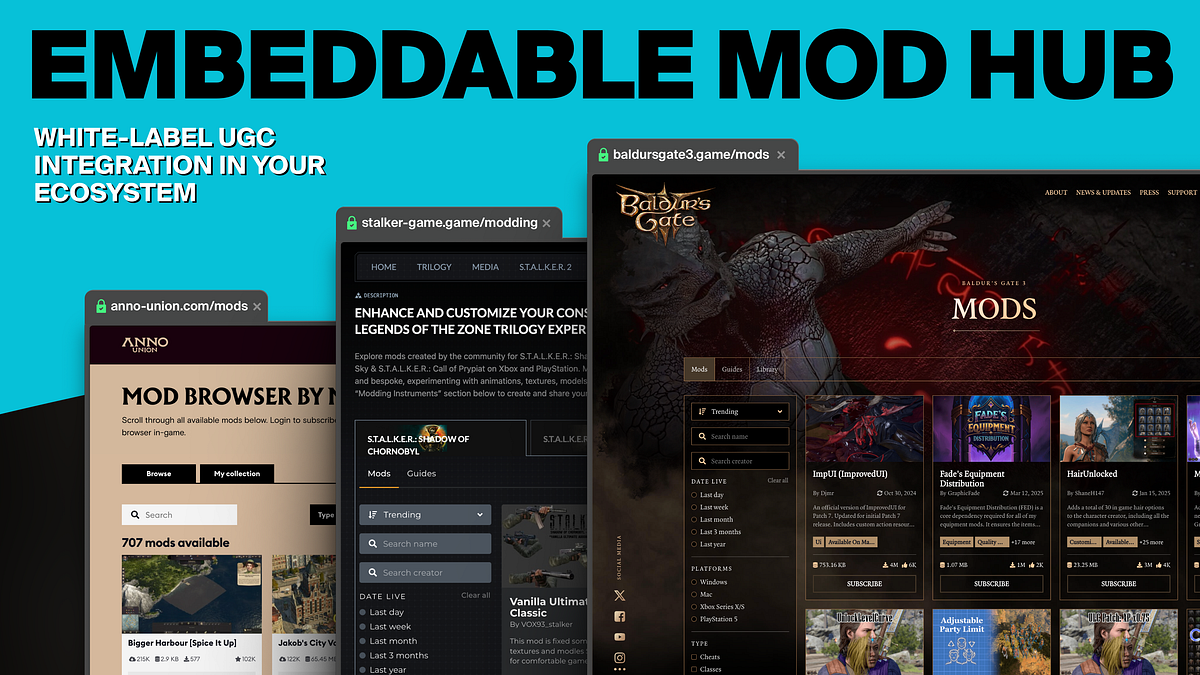
mod.io is a white-label solution, and provides game developers with the tools to integrate user-generated content or mod support seamlessly into their players’ experience. When fully integrated, our solution is mostly invisible for end users, preventing your players from having to leave your existing ecosystem, relying on third party tools, or being exposed to ads and other disruptions to their game experience.
Give players access to UGC anywhere in your ecosystem
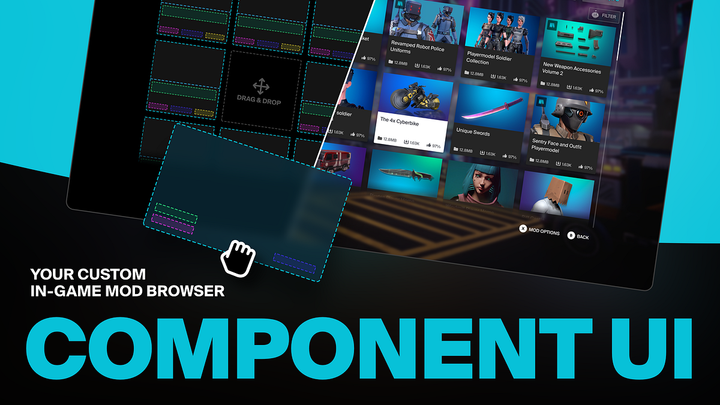
We’ve got tools like Component UI integrated in our engines plugins to achieve this easily for your in-game integration. This might however not be the only place where you want your players to be able to browse and subscribe to content. That’s where the Embeddable Mod Hub comes into play.
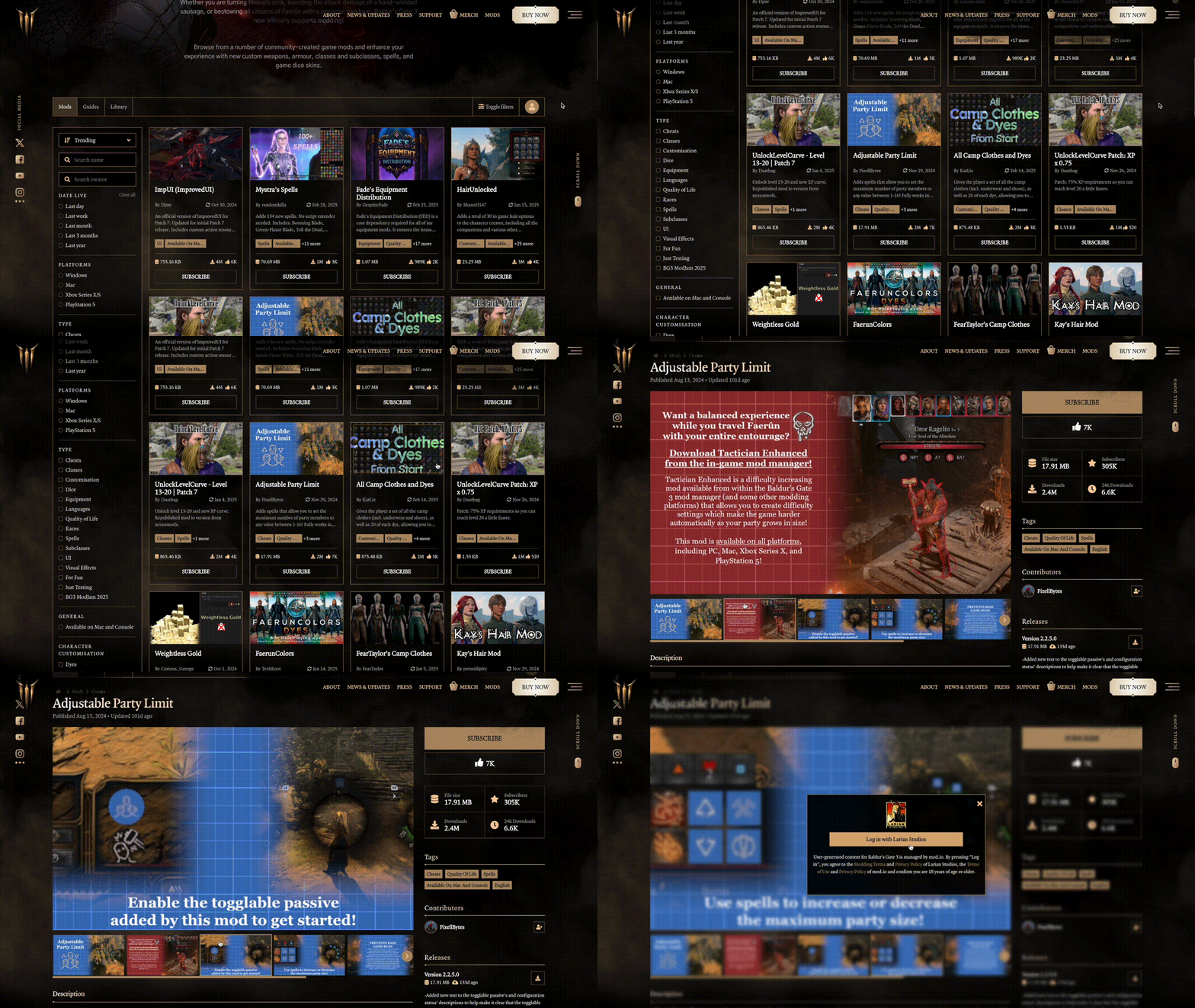
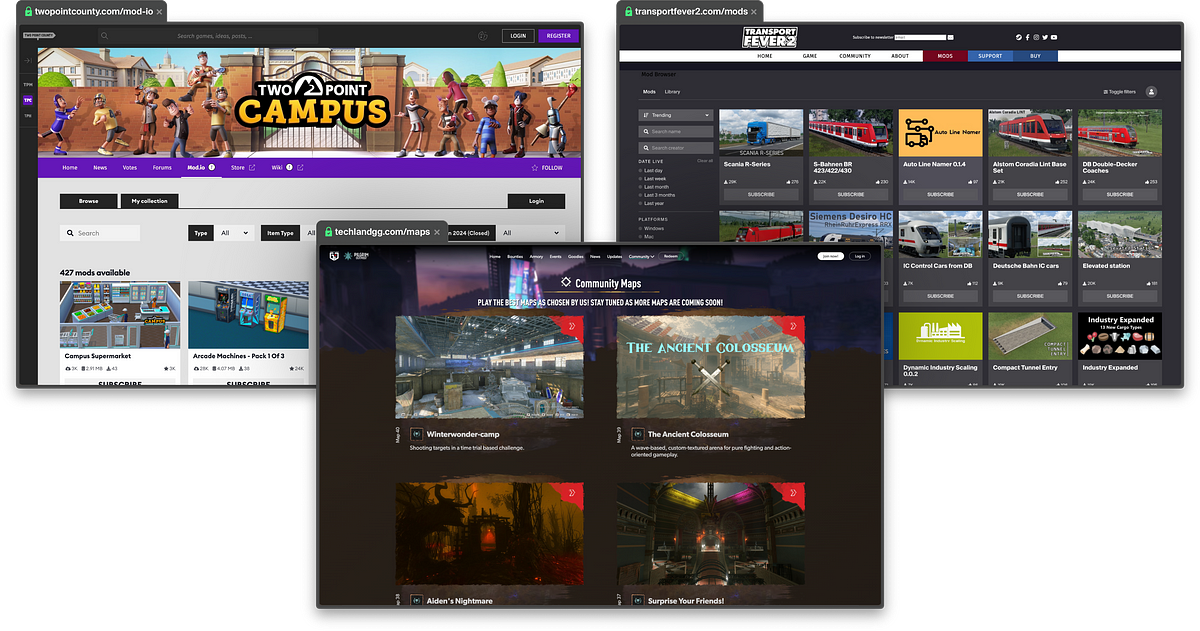
The Embeddable Mod Hub (EMH for short, or Embeddy Hubby as I personally like to call it) allows game developers to integrate the mod.io content browser into their own site or application. At its core, it’s an iframe that you can embed on a website or in a dedicated app like a game launcher for example. It’s a flexible solution, allowing players to browse and subscribe to user-generated content or mods from wherever you’d like.
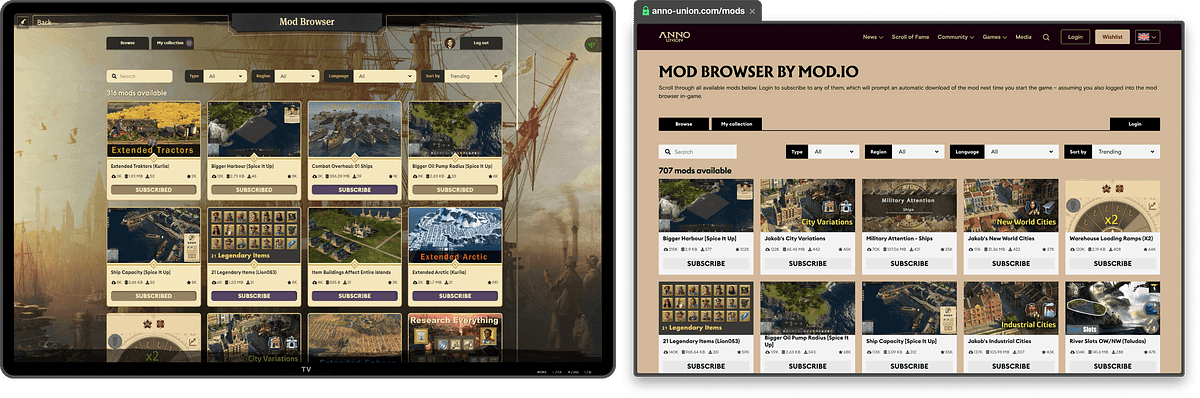
As with all our white-label solutions, it’s highly customizable, letting you build a UI fitting your game ecosystem. You can customize the theme very easily with our native tools, or completely override it with your own custom CSS. The examples in this article should give a good idea of how versatile it can be.
Dynamic, smooth, real-time experience
There are several methods for sending data & communicate with the EMH, allowing to modify it both on load and in real time. It’s not a static display of your mod browser, you’re able to set it up for players to perform pretty much any action within it and receive real time feedback, just as if they were using your in-game integration or the mod.io website.
This allows you to build an official mod support solution or UGC experience that’s consistent and smooth for players across all of your games ecosystem. Players browse mods on your website on any device, subscribe to content from there, and have it automatically downloaded and ready to play on their next game launch.
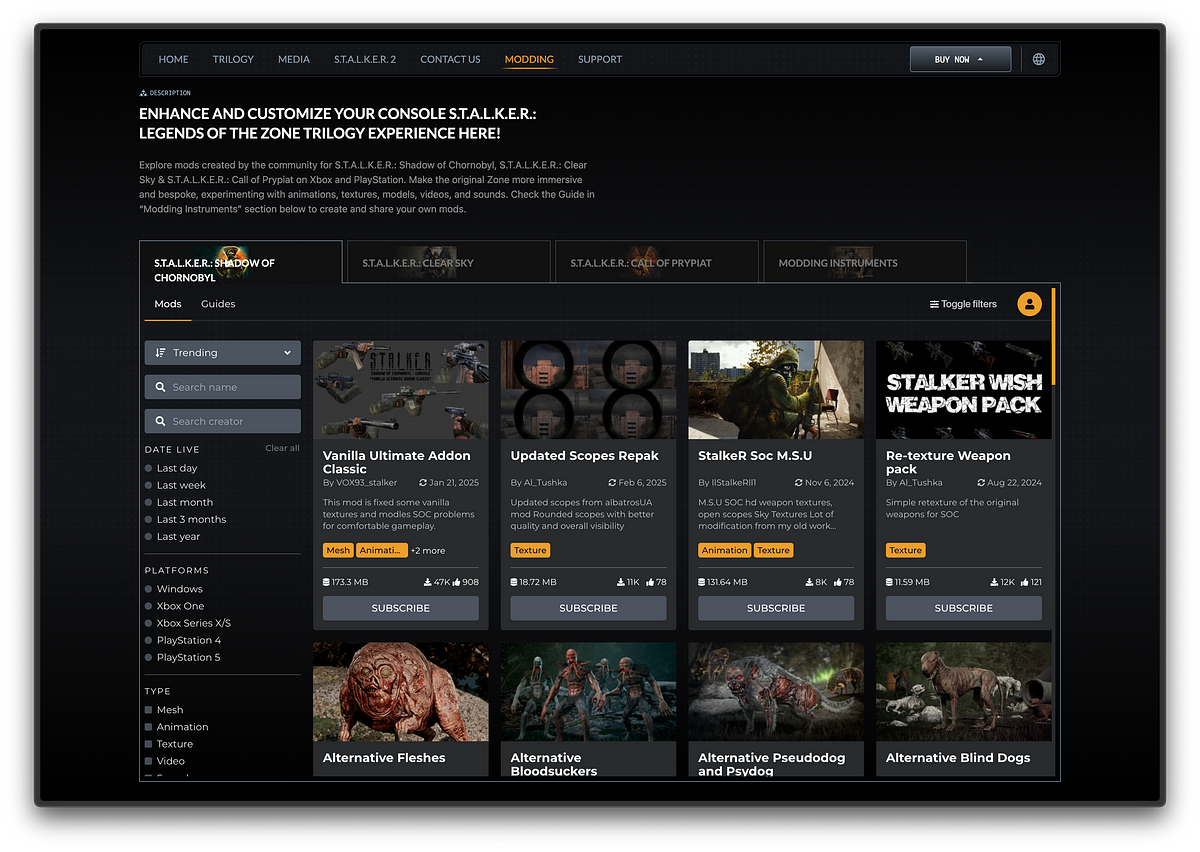
We’re constantly bringing improvements to our Embeddable Mod Hub solution; an update coming early next month will allow creators to create & upload content and access their settings from the EMH integration, without having to go through the mod.io website. It’ll also support all authentication methods and more actions that were previously only doable from the core website. Our objective is to be as close as possible to a pure white-label integration twhere a user never has to leave the game ecosystem to go on the mod.io website.
The Embeddable Mod Hub is a premium functionality, you can reach out to our team to get a cost estimate for your game. For more details about the EMH, check out our dedicated documentation.